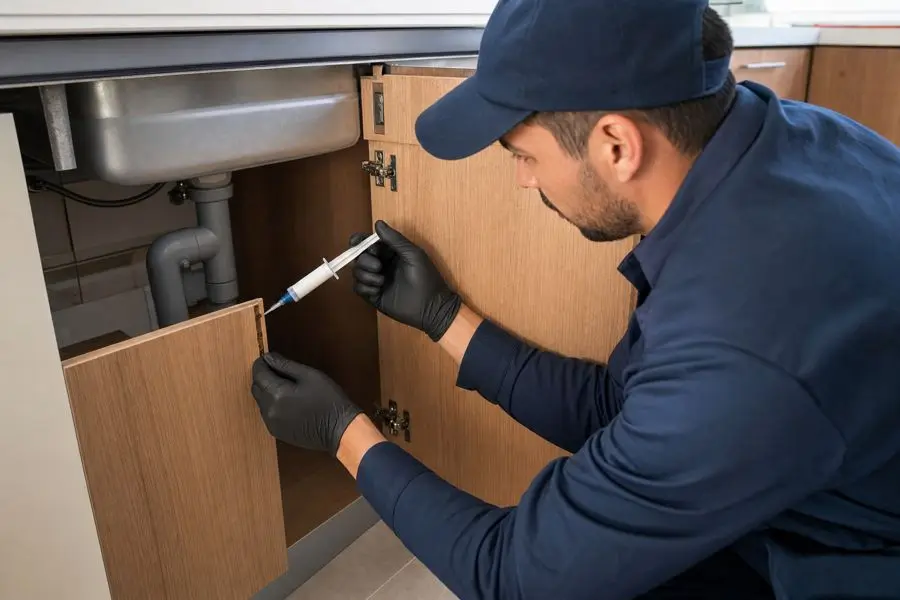
Home · Termite services · Termite wood repair
Joists · sills · studs · trim · sub-floor
Termite wood repair
Killing the colony stops the damage getting worse. It does not put back the timber that has already gone. Repair is a separate job, and on structural members it is the part that actually costs money. Call and we put you through to a local company.
- Real person answers, day or night
- Same/next day appointments in most areas
- Price agreed before work begins
- Nationwide network of local termite companies
Is this what you have?
The signs
- Floors that bounce, dip or feel soft underfoot
- Skirting, architrave or window sills that crumble when pressed
- Sagging between joists, or a sloping floor near an outside wall
- Sill plates or band joists that a screwdriver sinks into
- Door and window frames out of square
- Visible galleries once the surface of a timber is opened up
Heads up. Do not start repairs until the colony is confirmed dead. New timber going into an active infestation is money burnt, and cladding over damage hides the evidence the next inspector needs. Treatment first, repair second, in that order.
On the day
What the technician does
- Work out how far it goes
Damage is almost always wider than the visible patch. Probing and sounding along the member establishes where sound timber starts, which decides whether a piece is repaired or replaced.
- Decide structural or cosmetic
A chewed skirting board is a carpentry job. A compromised joist, sill plate or stud is structural and may need an engineer to specify the fix, particularly if it is load-bearing.
- Support, cut out, replace
The load gets taken on temporary supports, the damaged section comes out back to sound timber, and new material is spliced or sistered in and fixed to spec.
- Treat the new timber and fix the cause
New members are normally treated before they go in, and whatever kept the area damp — a leak, poor drainage, no ventilation — gets dealt with. Otherwise you are scheduling a repeat.
Practical
Getting ready, and what it runs
Preparation
Clear the rooms and the crawl space below the work. Expect dust, noise and floors to be up for a while. Say straight away if you know where wiring or plumbing runs through the affected area.
Who does it
Some termite companies do their own repairs, some sub-contract to a carpenter or a general contractor. Ask which, and who carries the responsibility if the repair is defective.
Insurance
Homeowner policies commonly exclude termite damage on the basis that it is preventable maintenance. Check your policy before you assume it is covered, and put any claim in early.
What moves the price
- Structural members versus trim and finishes
- Access — a crawl space job costs more than the same repair in an open basement
- Whether temporary support or an engineer's specification is needed
- Finishes that have to come off and go back on
- Any moisture or drainage work that comes with it
Questions
Termite wood repair — questions we get a lot
Do I have to repair it at all?
Cosmetic damage is your call. Structural damage is not really optional — it gets worse under load and it will come up the next time anyone looks at the house properly.
Can I repair first and treat later?
No. Treat first. New timber in an active infestation gets eaten too, and the repair buries the evidence of where they were getting in.
Will the treatment warranty cover the repair?
Usually not. Most warranties cover re-treatment only. Damage-repair cover exists but it is a separate, more expensive product with conditions — read exactly what yours says.
How do I know it has gone far enough?
Sound timber resists a probe; damaged timber does not. Ask to see where they stopped cutting and why, before the new material goes in.
 Termite inspection
 Termite treatment
 Termite fumigation
 Termite prevention plans
Get the damage assessed
Open 24 hours. Describe what you are seeing and we will put you through to a local company.